Saturday, November 5, 2011

Communities need to explore going Green…….

Today’s town and city budgets are growing tighter and tighter. Reduced tax revenues from high unemployment, rising medical and retirement costs for employees, and simple inflation causing ever escalating prices for the everyday items needed to operate a community combine to put a strain on any budget. As a result, any type of program providing a surplus of cash flow can be invaluable.

LED lighting is the latest program to be offered to the towns and cities throughout the United States. Not only does the installation of LED fixtures and bulbs immediately reduce energy costs, the lights have many more benefits than you might think.

Let’s explore a few of them….

Unlike CFL’s (compact florescent lights), LED bulbs light immediately, with no warm up period. LED’s have a life span of up to 100,000 hours of use, meaning there is less maintenance costs associated with them. There is little to no UV light production from LED bulbs, making them the perfect solution for anything that may be sensitive to light exposure. LED’s provide much better lighting than standard incandescent or CFL bulbs, improving night time visibility.

Perhaps the best part of LED (other than the savings in energy) is their durability. With no filaments to be broken, they are a great retro fit for street light and traffic signals. They can withstand the rigors of New England’s harsh winters with little problem.


incandescent street lighting
 The program is simple. With a quick 15 minute phone call, a preliminary quote can be produced with as little information as number of light fixtures and bulbs used throughout the community, the wattage of the bulbs, number of kilowatt hours used, and the rate the community pays the utility company.


LED street lighting

Within a few days, they’ll have a customized project quote for their community to take back to the appropriate approval personnel to review. Within a few months time, a significant cash flow savings can result. In addition, all rebates from the utility companies remain the property of the town or city.

Sounds great? It gets better. In a big city, it’s not uncommon to have 1 street light per 20 residents. In a city of say 500,000 people, that’s 25,000 street lights.  In today's economic situation, creating jobs is a primary focus of a city or town's managment, and this LED project will create jobs.
Contact me to get additional information on the program and to review available payment terms for the program.  From day1 of the installation, the city or town has realized substantial energy savings. The reduction in energy costs can exceed the monthly program costs often by as much as 40%. On a $200,000 monthly energy bill, they could see as much as a 40% reduction.

To find out more about this program (many commercial applications may be considered as well) or to set up a quote for your communtity, please contact me @DaveHanron on Twitter or via email at dave@davehanron.com

Monday, October 10, 2011

Capturing the Mobile Consumer…..Where Do I Start?

Today, there are more than 311 million people living in the United States and according to the CTIA Wireless Association, there are more than 300 million active subscription plans to some form of wireless service.

A wireless service subscription can be many different types. There are the wireless internet cards you can buy for your laptop, which gives complete mobile access to the internet from your laptop anywhere your carrier has an available network.

There are monthly plans you can purchase to obtain wireless access to public “hot spots” like coffee shops, diners, airports, etc. I have found these to be of limited value as the “hot spot” must be using the network you have enrolled in or else it is useless.

We are seeing a tremendous expansion of the mobile web seen on today’s cell phones. Most cell phone today come with a browser which allow you to access the internet with the add-on purchase of a data plan from your carrier.

Next we get to the “Smart Phones”. Today’s hot phone is the iPhone 5. Android, Window 7 phones, and yesterday’s favorite, Blackberry, all make smart phones which give access to the internet via the various carriers’ wireless data networks at speeds up to 4G. (4G stands for “4th Generation” of cellular standards for those of you who are wondering).
And let’s not forget tablets. Apple developed the iPad and launched the product in April 2010. The product sold 3+ million units within the first 80 days to market. Since then, we’ve seen similar products produced by companies like Blackberry, Sony, HTC, Dell, and many more. We are smack dab in the middle of the wireless revolution.

With the birth of the smartphone and tablets, a new channel of marketing has evolved to present product offers to wireless subscribers. Today’s consumers start their day at the kitchen table reading the paper online, continue to check email and stocks on their smartphone on the commute to the office, take their tablets to lunch to review the latest version of their presentation or check on tonight’s big game, then finish the day on their laptop again reading “tweets” on Twitter or posting to their Facebook accounts.

Sounds like a lot of wireless? It definitely is. But if a company manages their advertising budgets properly, they can take advantage of it. According to a recent US Census Bureau report more than 48% of total US retail sales were made online.

I strongly suggest to those business development professional that now is the time to embrace wireless, not run from it due to budgetary restraints. Direct some of your marketing budget towards starting a wireless marketing campaign. If you do nothing else, at the bare minimum, make sure your company has a mobile web friendly landing page. There’s nothing better to show off your business than having a professionally developed mobile page pop up for the consumers searching your product line.

I enjoy hearing back from my readers so please share any ideas you may have for marketing plans and any success you may have already had with your programs……

Thursday, September 29, 2011

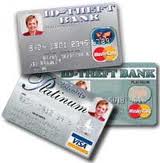
Some Thoughts to Digest on Identity Theft


Identity theft….Credit Card Protection….Data Breach….Fraud Alert….Credit Freeze.   All phrases no one wants to hear but they remain front and center in our lives.
Let’s face it, we live in a world where crime rises as the economy falls.  As people lose their jobs or become “under-employed”, they may become desperate to meet their financial obligations.  And unfortunately, sometimes people turn to crime.  Crime is not always robbing a bank or breaking into a home or business.  Sometimes it becomes a bit more personal……identity theft.
We are seeing a dramatic rise in identity theft.  According to the Washington Post, there were more than 8.1 million victims in 2010 alone.  By capturing some basic information like social security number, date of birth, and address, thieves can open new credit card accounts, bank accounts, and even make major purchases like cars in YOUR name.  Any of you who have experienced identity theft can attest to the time and expense it takes to repair your name and credit ratings.
Individuals have become more aware of the threat of identity theft.  Many families are shredding their personal information like charge card receipts, bank statements, utility bills, checks, etc. before disposing of them.  While this habit certainly helps, an individual needs to do more.
Businesses have been fighting back, by participating in programs like “PCI Compliance”.  PCI Compliance is a standard set by the credit card industry to ensure secure handling and data retention for credit card transactions.  Compliance includes a checklist of steps like criminal background checks on employees, encrypting the data transmissions of sensitive information, using and maintaining anti-virus software within a data platform, and more.  If a business does not adhere to PCI compliance regulations, and a data breach occurs, the compromised business may be subject to additional fines and/or penalties.
A data breach can be extremely costly to a business. According to Information Week, the cleanup of the latest Sony data breach of their Playstation network will cost the company upwards of $171 million!
Many businesses have begun purchasing insurance programs to provide coverage for credit repairs should a breach occur.  Many of these are limited programs and provide only notification, not assistance in repairing the damage. Those services come as an extra cost on many polices.
A new trend is developing in the market that is little known to the consumers.  Businesses are purchasing identity theft solutions for their data bases, which can be upsold to provide comprehensive coverage to the consumer for a dramatically reduced price.  Because the large corporations have the power of a substantial subscriber base, they are able to negotiate favorable rates for their customers.  These programs are being packaged as another “benefit” to being a customer or member of an organization.   Comcast is the latest example of a business to roll out a program for it’s customers, calling it “Constant Guard from Xfinity”.
Whether you have a business looking to add an identity program to your suite of products or an organization or union looking to add benefits for your members, contact me @Davehanron on Twitter or via email at Dave@davehanron.com for more information on the available programs.