Showing posts with label Sony. Show all posts

Monday, October 10, 2011

Capturing the Mobile Consumer…..Where Do I Start?

Today, there are more than 311 million people living in the United States and according to the CTIA Wireless Association, there are more than 300 million active subscription plans to some form of wireless service.

A wireless service subscription can be many different types. There are the wireless internet cards you can buy for your laptop, which gives complete mobile access to the internet from your laptop anywhere your carrier has an available network.

There are monthly plans you can purchase to obtain wireless access to public “hot spots” like coffee shops, diners, airports, etc. I have found these to be of limited value as the “hot spot” must be using the network you have enrolled in or else it is useless.

We are seeing a tremendous expansion of the mobile web seen on today’s cell phones. Most cell phone today come with a browser which allow you to access the internet with the add-on purchase of a data plan from your carrier.

Next we get to the “Smart Phones”. Today’s hot phone is the iPhone 5. Android, Window 7 phones, and yesterday’s favorite, Blackberry, all make smart phones which give access to the internet via the various carriers’ wireless data networks at speeds up to 4G. (4G stands for “4th Generation” of cellular standards for those of you who are wondering).
And let’s not forget tablets. Apple developed the iPad and launched the product in April 2010. The product sold 3+ million units within the first 80 days to market. Since then, we’ve seen similar products produced by companies like Blackberry, Sony, HTC, Dell, and many more. We are smack dab in the middle of the wireless revolution.

With the birth of the smartphone and tablets, a new channel of marketing has evolved to present product offers to wireless subscribers. Today’s consumers start their day at the kitchen table reading the paper online, continue to check email and stocks on their smartphone on the commute to the office, take their tablets to lunch to review the latest version of their presentation or check on tonight’s big game, then finish the day on their laptop again reading “tweets” on Twitter or posting to their Facebook accounts.

Sounds like a lot of wireless? It definitely is. But if a company manages their advertising budgets properly, they can take advantage of it. According to a recent US Census Bureau report more than 48% of total US retail sales were made online.

I strongly suggest to those business development professional that now is the time to embrace wireless, not run from it due to budgetary restraints. Direct some of your marketing budget towards starting a wireless marketing campaign. If you do nothing else, at the bare minimum, make sure your company has a mobile web friendly landing page. There’s nothing better to show off your business than having a professionally developed mobile page pop up for the consumers searching your product line.

I enjoy hearing back from my readers so please share any ideas you may have for marketing plans and any success you may have already had with your programs……

Thursday, September 29, 2011

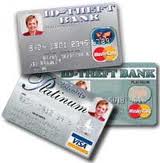
Some Thoughts to Digest on Identity Theft


Identity theft….Credit Card Protection….Data Breach….Fraud Alert….Credit Freeze.   All phrases no one wants to hear but they remain front and center in our lives.
Let’s face it, we live in a world where crime rises as the economy falls.  As people lose their jobs or become “under-employed”, they may become desperate to meet their financial obligations.  And unfortunately, sometimes people turn to crime.  Crime is not always robbing a bank or breaking into a home or business.  Sometimes it becomes a bit more personal……identity theft.
We are seeing a dramatic rise in identity theft.  According to the Washington Post, there were more than 8.1 million victims in 2010 alone.  By capturing some basic information like social security number, date of birth, and address, thieves can open new credit card accounts, bank accounts, and even make major purchases like cars in YOUR name.  Any of you who have experienced identity theft can attest to the time and expense it takes to repair your name and credit ratings.
Individuals have become more aware of the threat of identity theft.  Many families are shredding their personal information like charge card receipts, bank statements, utility bills, checks, etc. before disposing of them.  While this habit certainly helps, an individual needs to do more.
Businesses have been fighting back, by participating in programs like “PCI Compliance”.  PCI Compliance is a standard set by the credit card industry to ensure secure handling and data retention for credit card transactions.  Compliance includes a checklist of steps like criminal background checks on employees, encrypting the data transmissions of sensitive information, using and maintaining anti-virus software within a data platform, and more.  If a business does not adhere to PCI compliance regulations, and a data breach occurs, the compromised business may be subject to additional fines and/or penalties.
A data breach can be extremely costly to a business. According to Information Week, the cleanup of the latest Sony data breach of their Playstation network will cost the company upwards of $171 million!
Many businesses have begun purchasing insurance programs to provide coverage for credit repairs should a breach occur.  Many of these are limited programs and provide only notification, not assistance in repairing the damage. Those services come as an extra cost on many polices.
A new trend is developing in the market that is little known to the consumers.  Businesses are purchasing identity theft solutions for their data bases, which can be upsold to provide comprehensive coverage to the consumer for a dramatically reduced price.  Because the large corporations have the power of a substantial subscriber base, they are able to negotiate favorable rates for their customers.  These programs are being packaged as another “benefit” to being a customer or member of an organization.   Comcast is the latest example of a business to roll out a program for it’s customers, calling it “Constant Guard from Xfinity”.
Whether you have a business looking to add an identity program to your suite of products or an organization or union looking to add benefits for your members, contact me @Davehanron on Twitter or via email at Dave@davehanron.com for more information on the available programs.

Sunday, July 24, 2011

Worried About Identity Theft? Some Thoughts.......

As I’m sure mostly everyone is aware, Sony’s Playstation 3 on-line network and Qriocity streaming video and music service were hacked and were offline from April 20, 2012 to May 14, with all services restored by May 31, 2011.  According to Sony, as many as 77 million subscribers may have subject to privacy invasion, involving sensitive information including credit card numbers, security information, and purchase history.

According to a story published in the International Business Times, Sony has issued apologies for the breach and vowed to pay damages to affected users.
The problem this brings to light is how do today’s businesses protect themselves from these types of data breaches going forward? 
In today’s information age, the likelihood of future identity breaches is a constant threat.  There are identity protection services popping up all over the internet.  If you were to “Bing” identity theft companies, you’d get over 2.4 million results.  Google provides even more stunning results, more than 14 million companies providing the service!
But should the Consumer have to pay for this protection themselves?  Many people do….but is it necessary?  A little known fact is that the government passed an act called the “Red Flag Rules” as part of the Fair and Accurate Credit Transactions Act in 2003.  In summary, this Act requires financial institutions and creditors to provide for the identification, detection, and response to patterns, practices, or specific activities, known as Red flags, which could indicate identity theft.  These programs are required to be in place by November 2009.

According to Chris Heidkamp, VP of Channel Sales at Securus Identity Solutions, “While the Red Flag Compliance regulations don’t legally require any specific type of program be put in place, many corporations have neglected to implement any identity theft program because they felt the cost was prohibitive.  That is simply not the case any longer.”
According to Heidkamp, “programs can start as low as 15¢ per subscriber per month. This protection can provide the consumer the peace of mind they’re looking for in the event of a data breach like those seen at Sony and Epsilon.  Many of us have received the letters regarding the Epsilon breach, coming from merchants like Verizon, Hilton Hotels, Air Miles, Best Buy, Citigroup, and Walgreens.  This heartache can be avoided with the addition of a corporate identity protection program.”
It would seem it would be worth a phone call to your utility company or other monthly creditor to determine whether they have an identity program you can participate in.  Ask for the company’s position and business plan for “Red Flag Compliance” and you may just avoid the cost of a personal identity protection program.
If you would like any additional information on Red Flag Compliance, please contact me directly at @Dave Hanron or Mr. Heidkamp @ChrisHeidkamp on Twitter or Heidkamp@securus-solutions.com


Saturday, May 7, 2011

Who Owns the Customer?

The Salesperson turns in the big contract, the account gets implemented by the Order group and then is handed over to the Customer Service team to monitor and cultivate; the Operation staff maintains the product line, IT monitors the functionality of the platforms, and Finance processes the revenues.

So who owns the Customer?

The Company will tell you the “Company” does.  This position certainly has merits as all the above sections of a corporation work together to form the core of the “Company”.  Since everyone draws a paycheck from the “Company”, at first glance I would tend to agree. 

However, here’s the million dollar question … since it is the customer’s existence which drives revenues for the company, the real answer to this question lies within “who does the Customer believe their business belongs to”? 
I guess it really depends on the type of product we’re talking about.  If it is a television, I would tend to lean towards the “company” definitely owning the Customer.  If your 6 month old 50” Sony TV 
 (sorry folks at Sony, I had to use somebody’s brand as an example –this in no way implies I’ve had problems with any Sony products, I’ve actually had great stuff from Sony over the years)
suddenly went blank, I’m sure we’d all be on the phone to Sony ASAP.  You wouldn’t try and contact the sales clerk who rang in the sale at Target.  You’d Google or Bing “Sony TV repairs” and you’d be on your way. 
Now let’s look at another product:  your car.  I know when I buy a car, I hold the salesperson from the dealership responsible for that vehicle until I sell or trade it.  If my car breaks down, I call the salesperson who 99% of the time will gladly take your call and arrange for service and in most cases, a replacement car while your’s is in the shop.  This is an example of taking ownership and “farming” your account base.  Take care of your customer and when your customer wants to buy additional services (in this case, a new car) they’ll more than likely call you.  In this example, it is the salesperson who owns the Customer.  Many car salesmen will change dealerships and even brands throughout the years, but maintain their repeat customer base as they move because of the service they provide to their customers.  Underappreciate your existing base, and they will surely go to your competition when the time to buy additional service or product rolls around.
Another example in my life experience is dentists.  I have a dental hygienist who I’ve been using for more than 20 years.  She’s worked with at least 4 different dentists throughout the years and each time she’s moved, I’ve gone with her to the new dentist.  It really had nothing to do with the quality of the dentist or support staffs they had, I simply like the hygienist and wanted to stay with her.  As she had a sizable following like myself who would move with her, she brought value to her new positions and was able to negotiate improved employment packages with each change.  In this case, the hygienist (I liken her to an operations staff employee), not the dentist, owns the customer.
Over the years, how many times have we seen employees move from one company to another, and had to sit idly by as our customer base followed the former employee?  Companies know this too; that’s why “non-compete” clauses are often built into employment contracts.
The point of this discussion is to always remember, each and everyone of us like to think we made a good decision when buying a product or a service.  The difference is when we buy a tangible product like a toaster, we equate the product to the company.  When we buy a service or a service prone product (like a car or dental services), we equate the service to a person.  And people buy from people they like.  That person is not necessarily in a particular role within a company. Sometimes it may be the salesperson, sometimes it could be the Customer Service rep, or the IT staff member.  It really depends on the customer’s needs and the amount of interaction they have with the person in a particular role.
If you take nothing else from this post, remember the next time you are speaking to an existing client or a potential prospect, you only get one chance to earn their confidence.  Lose it, and you will most likely lose either a sale, or even worse, an existing client.
Take the time to think of how the customer will react to what you are about to tell them, consider all possible reactions, and proceed accordingly.  Treating the customers so they feel their business always comes first is a crucial step to building your reputation as a professional.   Whether you’re in sales, or finance, IT, customer service, or any other aspect of a company, the needs and potential reactions of the customer should always be considered first.
Ultimately, it's my opinion, regardless of your position within the company, if you do your best to make the customer feel their business is welcomed and applauded by the company, they will be a loyal and long term client.  If they feel like they are only a number, they will most likely either not buy from you or your company at all or they will remain a client for only a short period of time, until a more likeable personality comes across their professional path.
As this is only my opinion, I enjoy sharing any experiences any of my readers have had along these lines.  I welcome any comments or suggestions on the topic.
So, who do YOU think owns the Customer?
On Twitter @DaveHanron